The Snow Princess Motif
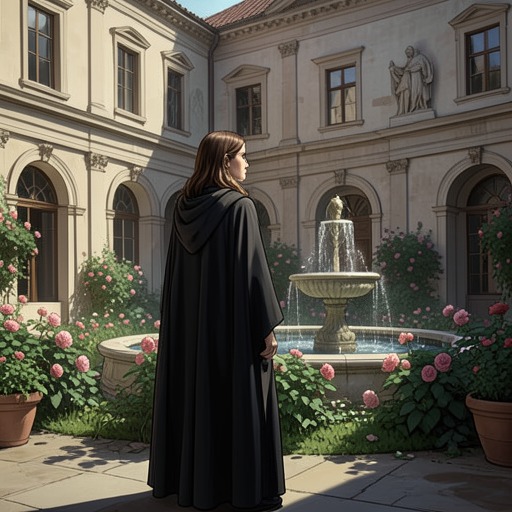
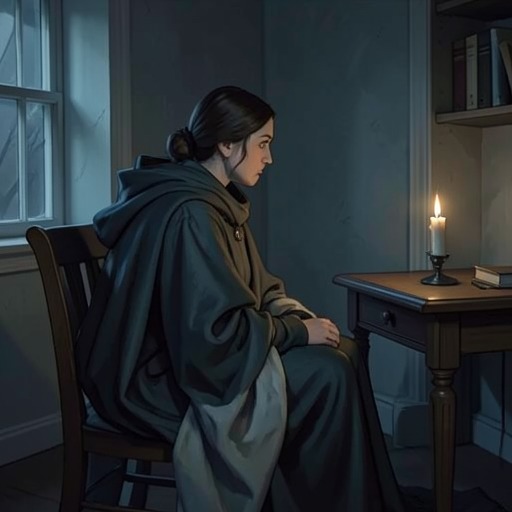
The Constant PrincessThe Snow Princess Motif gives form to Catalina’s long years of deprivation in England: she imagines herself as a princess frozen in an alien winter, outwardly enduring while warmth, hope, and even feeling seem to recede. The image links her isolation at court to the physical cold around her, her estrangement from faith, and her persistent longing for Arthur and her homeland. It does not simply describe sadness. It captures the frightening possibility that the determination sustaining her has hardened into numbness.
Origins in confinement and loss
The motif grows out of a life progressively stripped of its protections. Catalina loses the confessor her mother appointed, the ladies who cannot afford to remain in her impoverished household, and finally her house on the Strand, which had been a small refuge in a foreign land. María de Salinas stays with her out of love, but the wider household contracts as Catalina loses the means to pay for anyone else’s service. The losses make her isolation material: familiar people and a home disappear, not merely her sense of belonging.
The king’s offer of rooms at court initially seems to promise reconciliation and a chance to see Harry Tudor. Instead, Catalina is given poor rooms and service, and sees him only at formal occasions. When the court leaves on progress without telling her household, she must follow along unmarked country lanes; after catching up, she is assigned rooms over the stables. The scene of the unwanted household trailing behind the court gives the later fairy-tale image a political setting: this is a princess whose rank does not protect her from being treated as irrelevant.
Her allowance is stopped, and she has no money of her own. The Spaniards serving her cannot leave either, so their shared condition is one of entrapment, aging, and resentment. In this context, the sleeping-princess image is not a decorative fantasy. It translates prolonged dependence and exclusion into suspended life: Catalina feels as though she will never wake, while the years continue to pass around her.
Winter made physical
The image becomes literal in an April cold severe enough to freeze the water beside Catalina’s bed by midnight. Frost whitens the bedroom windows, the fire can no longer be kept through the night, and ice-cold grass crunches beneath the thin soles of her boots. These details make deprivation register through ordinary necessities: a cup of water, a fire, a pair of boots. Winter is not a distant metaphor imposed on her experience; it is the environment against which each day is endured.
Against that cold, Catalina imagines the coming English summer as mild sweetness but longs instead for the burning heat of Spain, Catalina’s homeland. She wants its warmth to bake despair out of her. The contrast is less between two climates than between present captivity and remembered belonging. She feels she has been cold for seven years, a duration that turns seasonal weather into the measure of a prolonged personal winter.
The passage also projects the cold forward. If Henry VII is dying, and Harry Tudor takes the throne and marries Eleanor, Catalina imagines asking her father to let her enter a convent. She sees that possibility as no poorer, colder, or lonelier than her life already is. She even acknowledges wishing she had died with Arthur, revealing how completely the prospect of release has narrowed. The motif gathers these fears without resolving them: its princess remains in the winter, imagining escape rather than awakening.
Numbness, faith, and the surviving heart
Catalina insists that she has sworn never to despair, partly because she sees the women in her family as vulnerable to it. Yet she does not experience her present condition as ordinary surrender. The resolve that once directed her toward queenship has, in her account, become stone; she feels not that emotion has overwhelmed her, but that she has misplaced emotion itself. Her self-image shifts from a determined claimant to a block of ice, a princess of constant snow. The distinction matters: the motif represents not simply grief but an estrangement from her own capacity to feel.
That estrangement extends to religion. Catalina tries to pray but can no longer sense God’s presence, fear of divine will, or joy in divine blessing. She doubts that she remains specially chosen, whether to be blessed or tested, and interprets the silence as God turning away from her. Her earthly father’s apparent forgetfulness supplies the painful analogy: if he can forget the child who was once his favorite, she reasons, her Heavenly Father might forget her too. The motif therefore marks a crisis in the beliefs that had helped her understand her suffering as part of a providential purpose.
Still, the winter does not erase everything. Catalina can feel her love for Arthur, figured as a warm, still-beating heart in a small bird fallen from a frozen sky. She also continues to long for the Alhambra Palace and al-Yanna: the garden as paradise. The contrast between the frozen landscape and these two surviving attachments—her dead husband and an imagined or remembered place of refuge—shows that numbness is not total. Love and longing persist as fragile warmth within the image of ice.
Time counted as loss
The motif also converts waiting into bodily and dynastic time. Each year, Catalina hopes that her circumstances will change. Harry Tudor’s birthday returns without turning their betrothal into a marriage, and she registers another year of her fertile life gone. Each midsummer, the dowry payment falls due without a draft from her father, bringing shame as well as financial uncertainty. Repeated dates make the passing years feel like a cycle from which she cannot wake.
Catalina counts her menstrual cycles across seven years: twelve each year, eighty-four in all. Each period becomes, in her interpretation, another lost chance to bear a prince for England. She grieves the stain on her linen as though it were a child lost and describes herself as learning to miscarry, learning its sorrow through repetition. The passage does not present these cycles as actual pregnancies or miscarriages; it shows how the pressure to produce an heir makes the absence of pregnancy itself a recurring grief.
The snow-princess image thus holds several kinds of suspended life together: political dependence, exile from home, shaken faith, bereavement, and the repeated passage of reproductive time. Its fairy-tale shape promises the possibility of waking, but the evidence here offers no awakening. Instead, it leaves Catalina conscious of the cold, able to name what remains warm, and still enduring a winter she cannot command to end.